
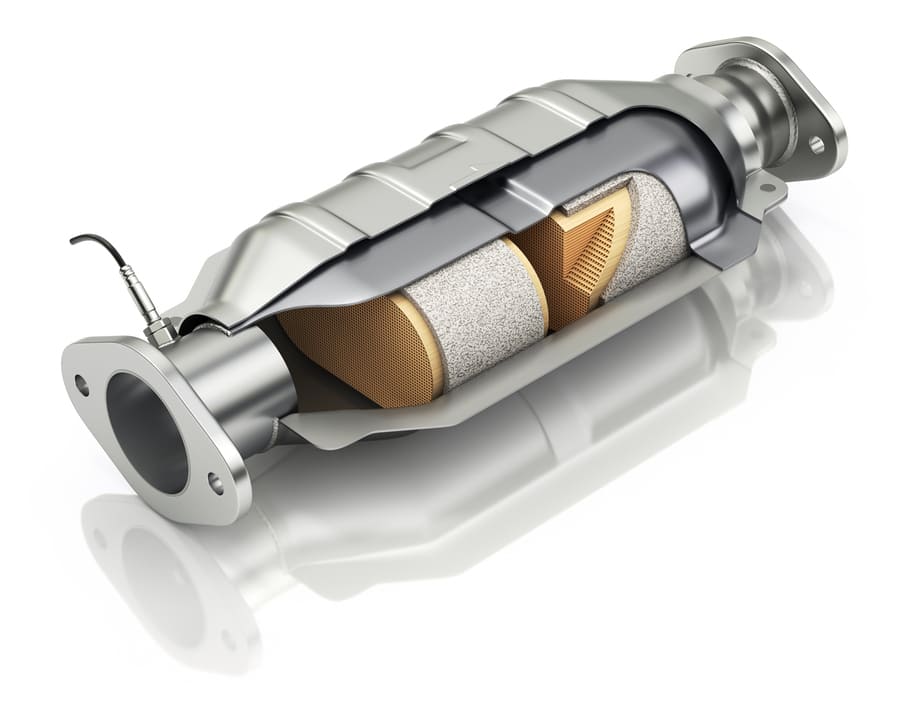
As early as 1975, in Japan, the United States, and later in Europe, attention began to focus on the use of catalytic converters and the added value they provide. Today, in most countries around the world, almost every passenger car is required to have a catalytic converter. This is because the exhaust gases emitted by vehicles cause significant harm to both the environment and human health. Over time, scientists have worked to develop methods and technologies to reduce this damage, which today are widely known as catalytic converters.
It is important to note that the working part of a catalytic converter is highly porous, allowing a large active surface area to fit within a small volume. Catalytic converters are divided into reduction and oxidation types. The active material in both types is ceramic, coated with layers of platinum, palladium, and rhodium. The catalytic converter plays a crucial role in processing exhaust gases, significantly reducing harmful emissions and thus protecting the environment and human health.
However, the production of catalytic converters requires very expensive and rare metals, such as platinum and palladium, the prices of which are measured in thousands.
The efficiency of a catalytic converter can be classified into three stages: operational, semi-operational, and non-operational.
- In the operational stage, the converter functions normally.
- In the semi-operational stage, the driver may notice reduced engine power, loss of RPM stability, and increased fuel consumption.
- When the catalytic converter reaches a non-operational state, the engine may fail to start, or it may start and immediately stall once it begins running.